A recorded live translation and consequent elaboration of a Dutch speculative story set in the near future.
The central themes of the text are reckless extraction, deforestation, rapid loss of the natural, speculation, technology, human innovation, and the consequences of unchecked human expansion.
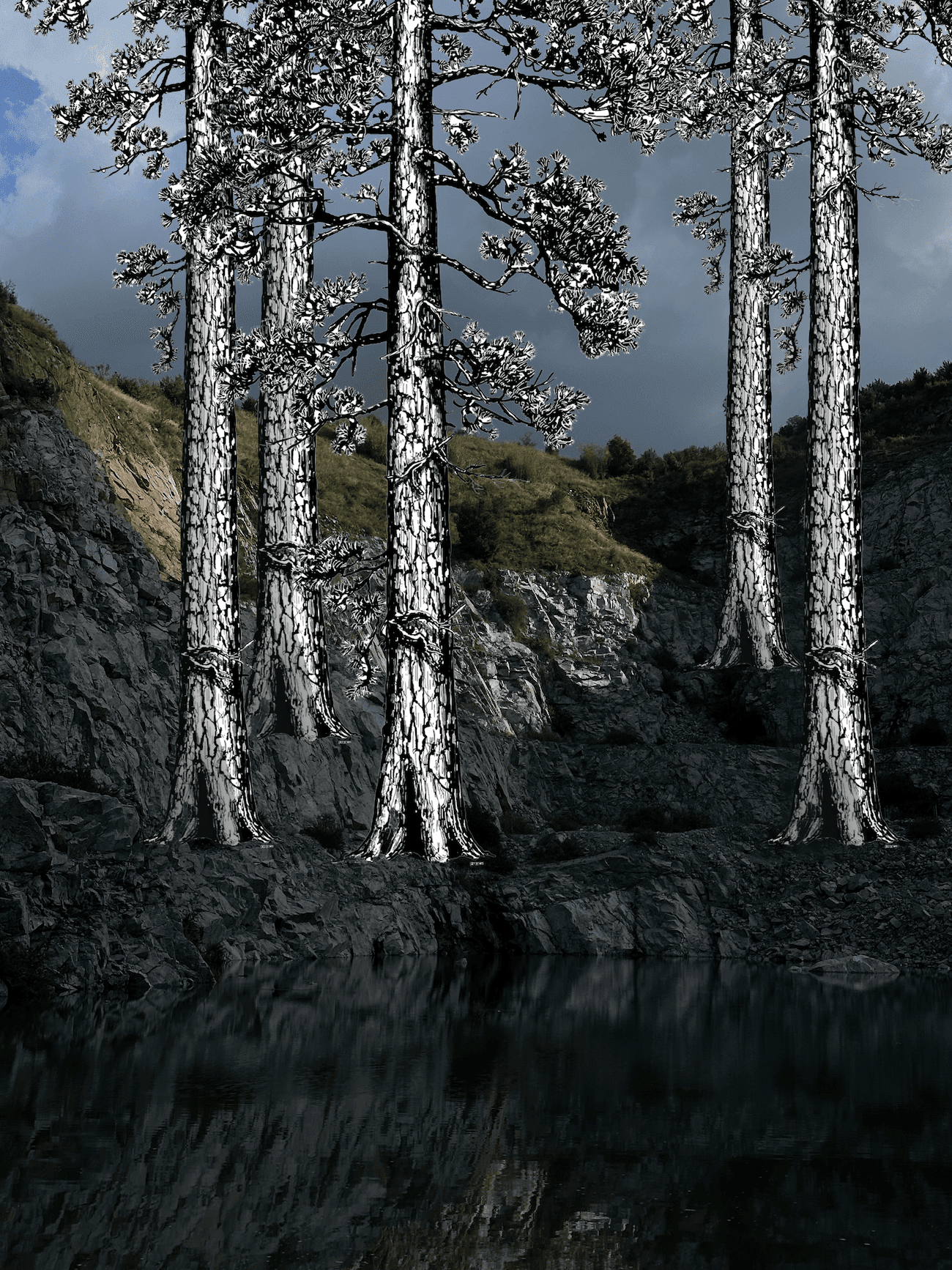
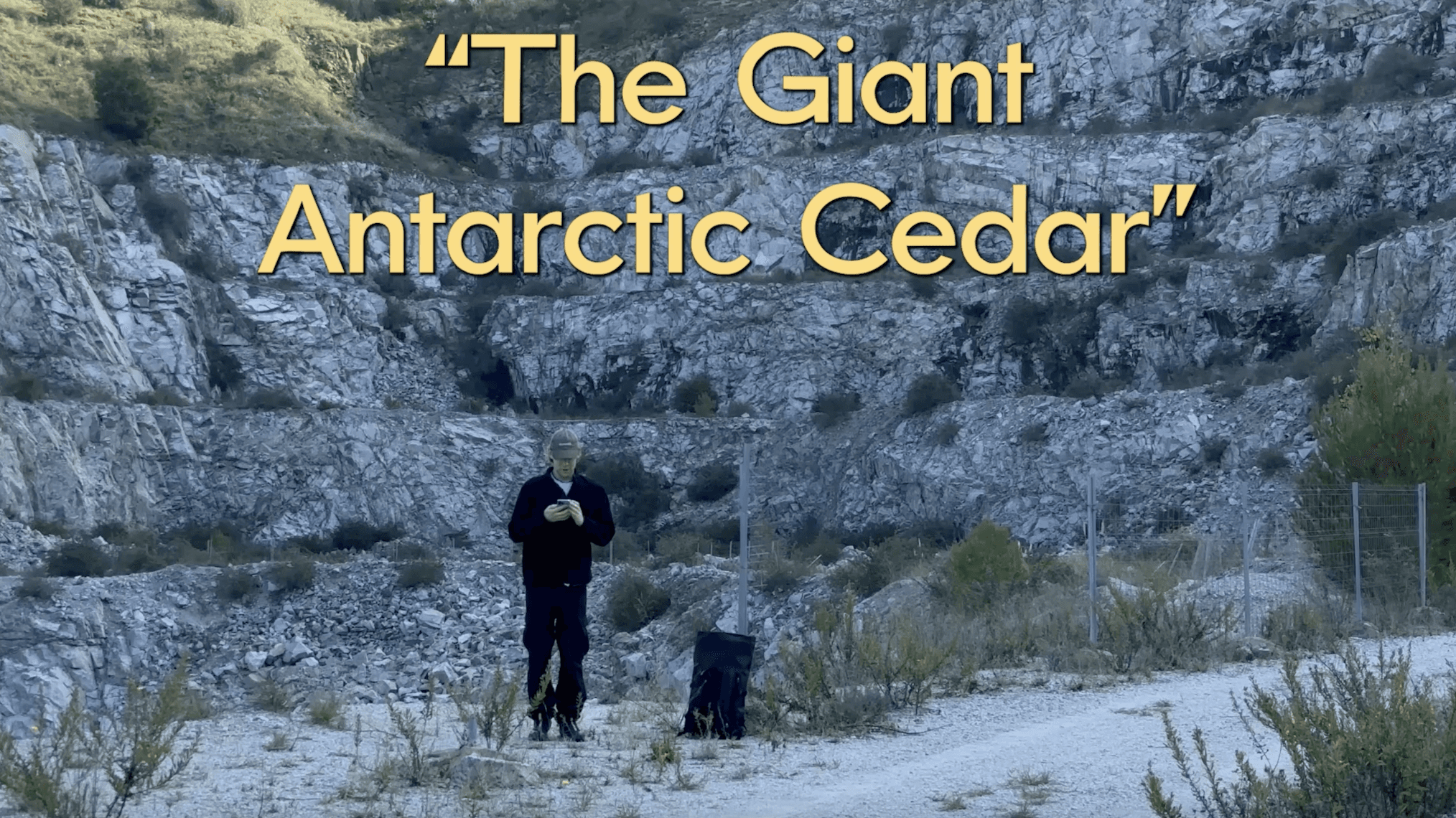
The Dutch-to-English live translation was carried out by me, stationed within a decomissioned stone quarry just outside of Barcelona, Spain.
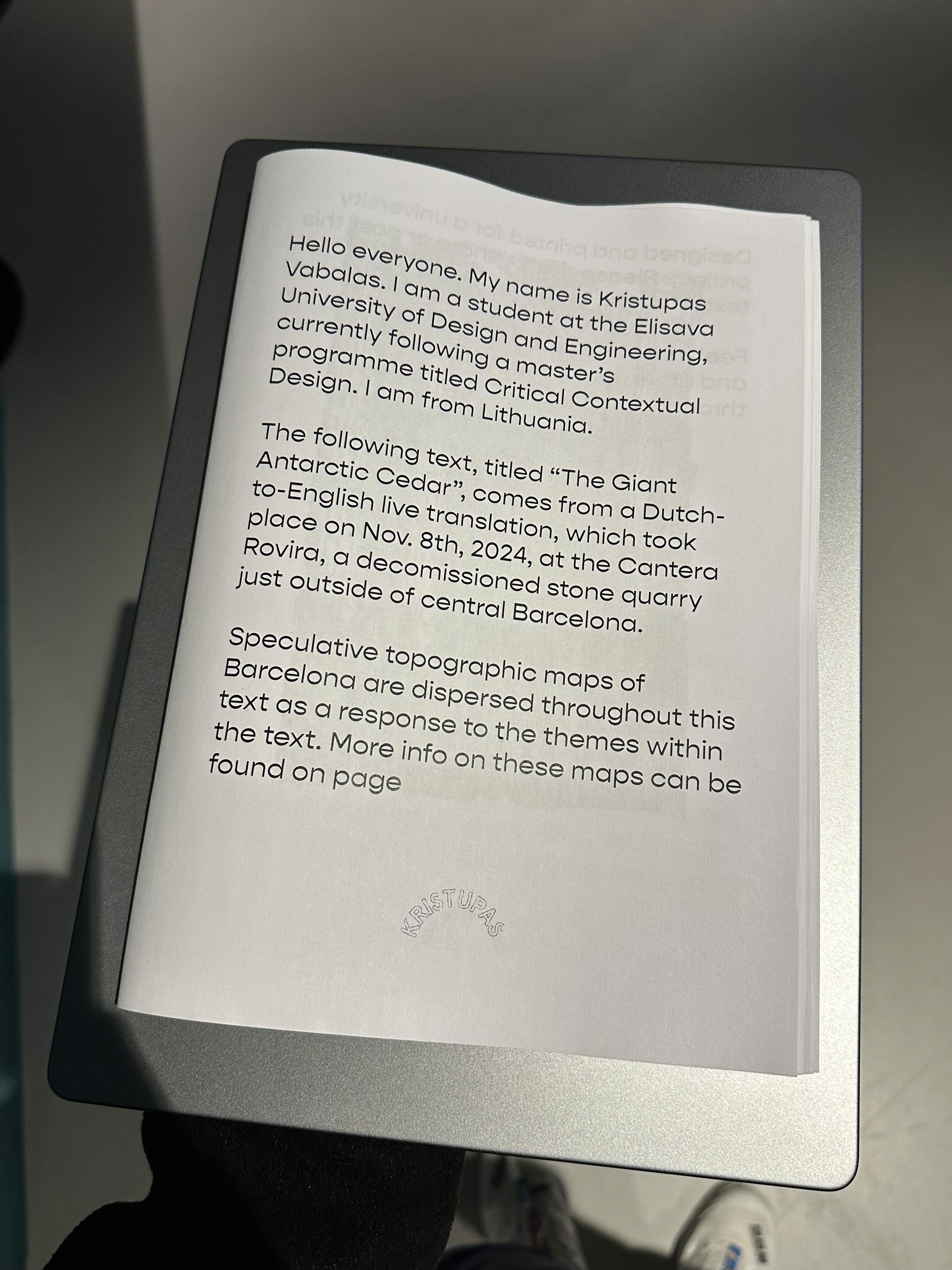
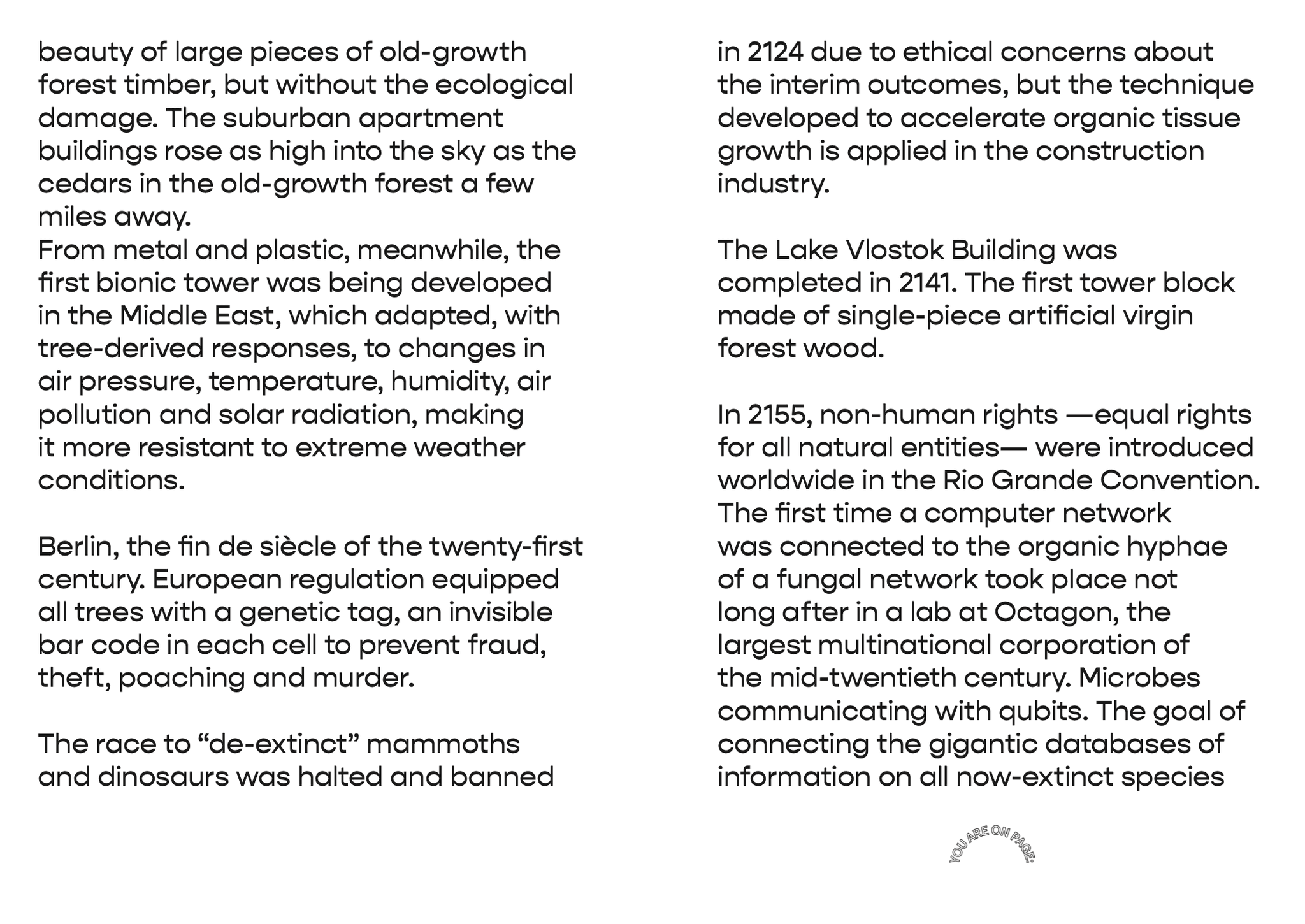
This event was then synthesized into a publication, complemented by topographic scans of pavement stones from the old town of Barcelona, acting as speculative maps of the city’s future.
The inspiration behind this approach was the constitutional addition of the Rights of Mother Earth in Bolivia, which came after the 2008 Ecuadorean legal recognition of the Rights of Nature.
The focus became the fact that Mother Earth was entirely undefined. In the hands of the people’s interpretation, it began being used against good will.
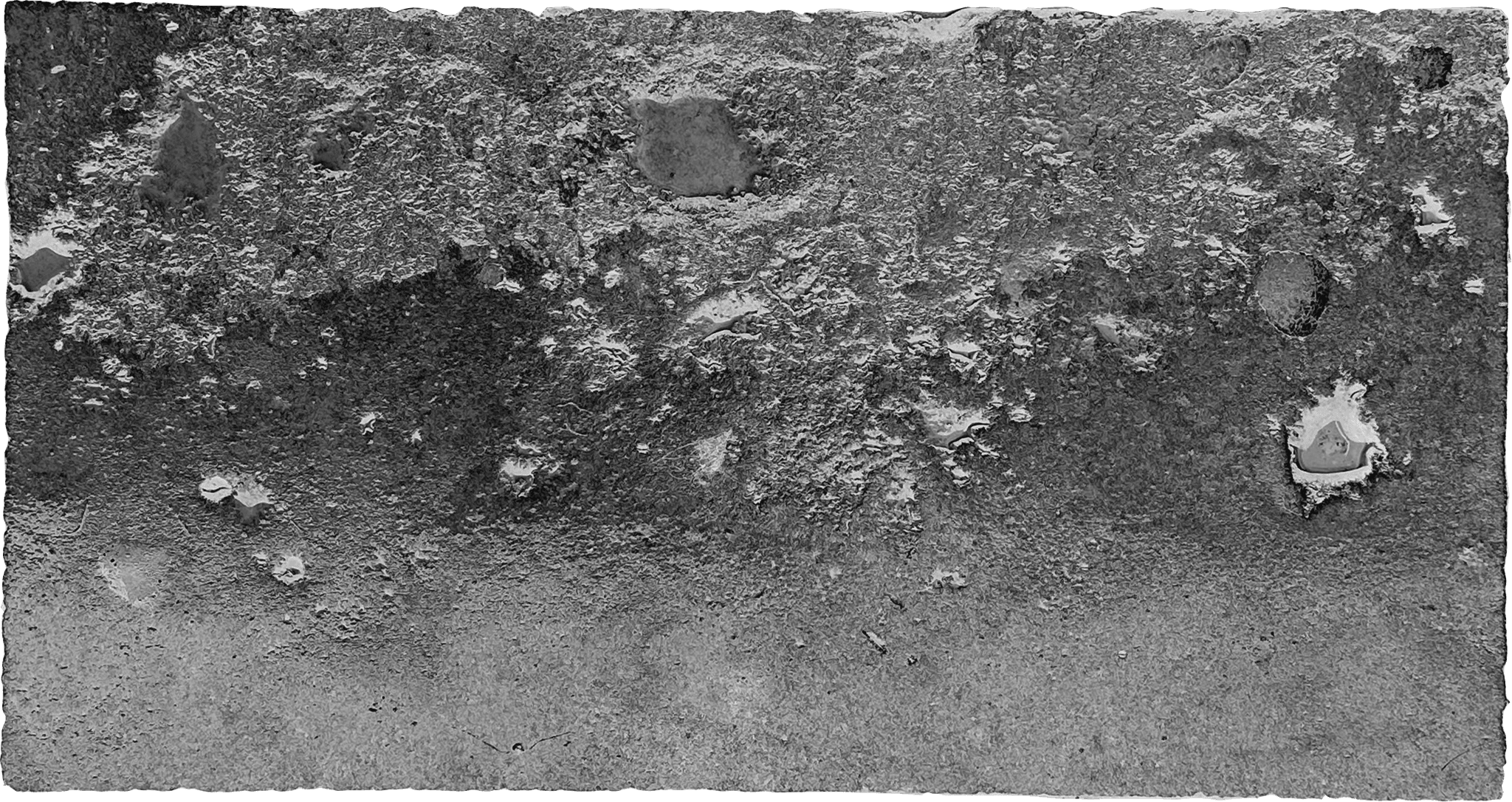
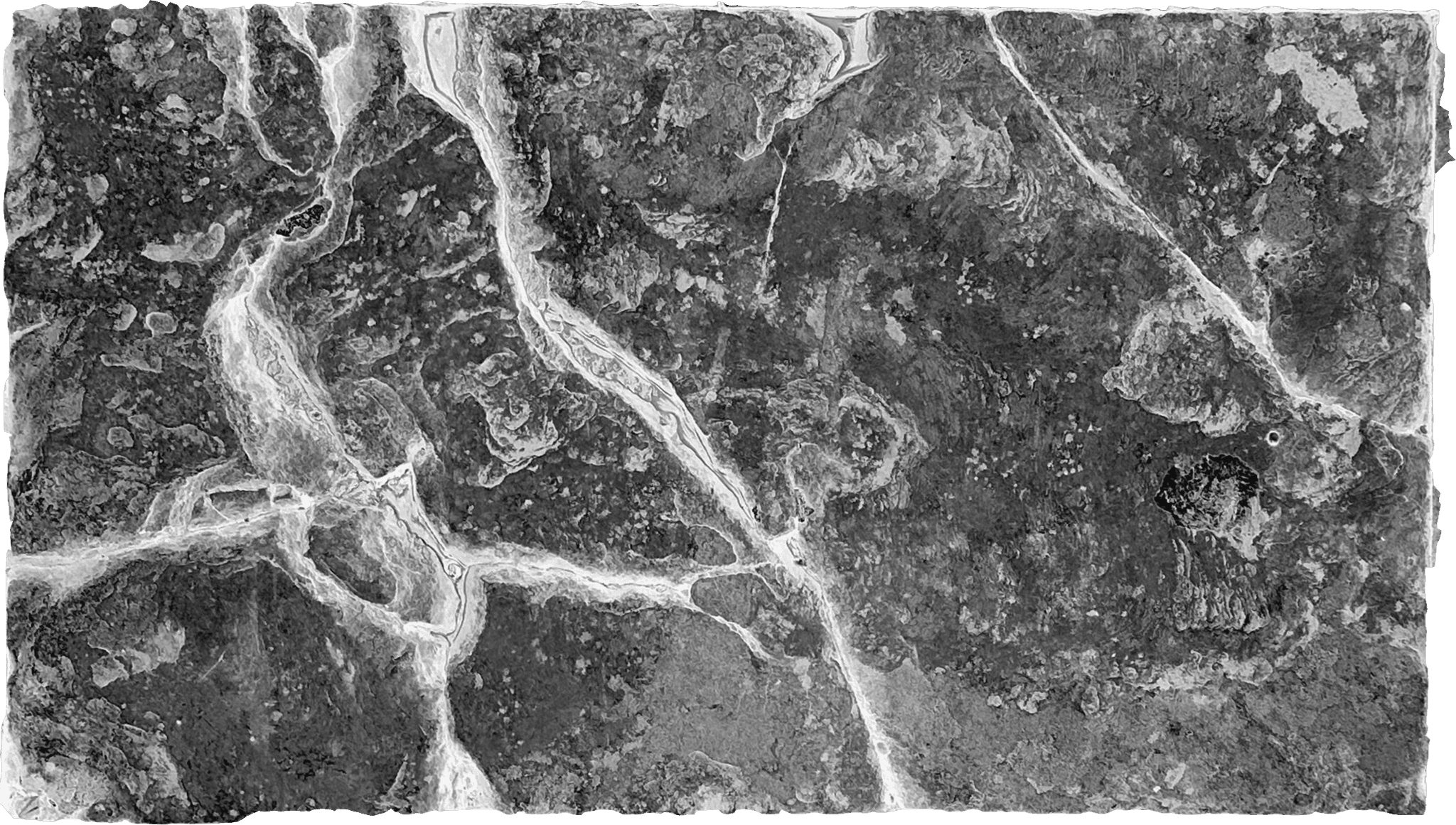
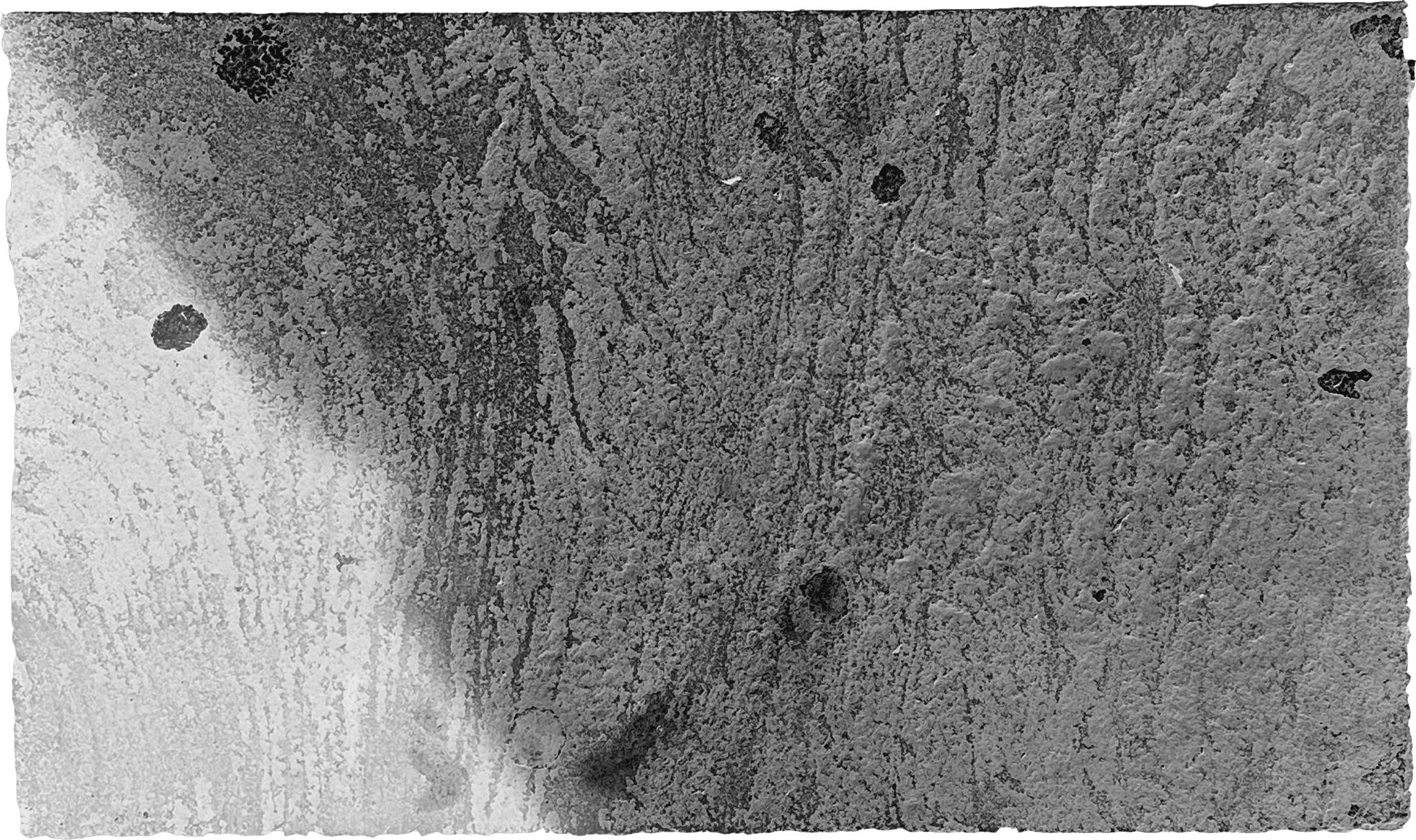
The goal was to implement a perspective into this discourse that wasn’t human, simultaneously using design as a tool for accessibility.
A map is typically created by people, for people. These maps were created from the biased perspective of the stone that paves the old town.
Rain, wear-and-tear over time, cracks, dents, etc. formed what look like rivers, ponds, beaches, mountain regions, and remnants of cities.
A sort of imitation of entire cities being constructed, demolished, moved, adjusted in tandem with natural phenomena.
Why this(/a) live translation?
The answer is twofold. One, I’m interested in design as a tool of accessibility, especially when academic knowledges are at play, so translating a text that is only available in Dutch felt like a step in that direction. I wanted to introduce the hopeful perspective in the text to a larger audience, but language was a limiting factor.
Two, speculation is a worldwide practice. The themes explored in this reading are the direct opposite of what happens in a quarry. They aren’t cutting down trees (extracting), they’re colonizing by planting trees. They’re not destroying ecosystems to build cities, they’ve created ecosystems that double as the cities, without further ecological damage. These hopeful speculative advances are applicable to the entirety of the world. Quarries aren’t limited to Barcelona, either.
So opening the speculation, and consequent conversation up beyond this one quarry worked with the source material.
… Antarctic Cedar
SPECULATIVE FUTURES, PERFORMANCE, PUBLICATION
